
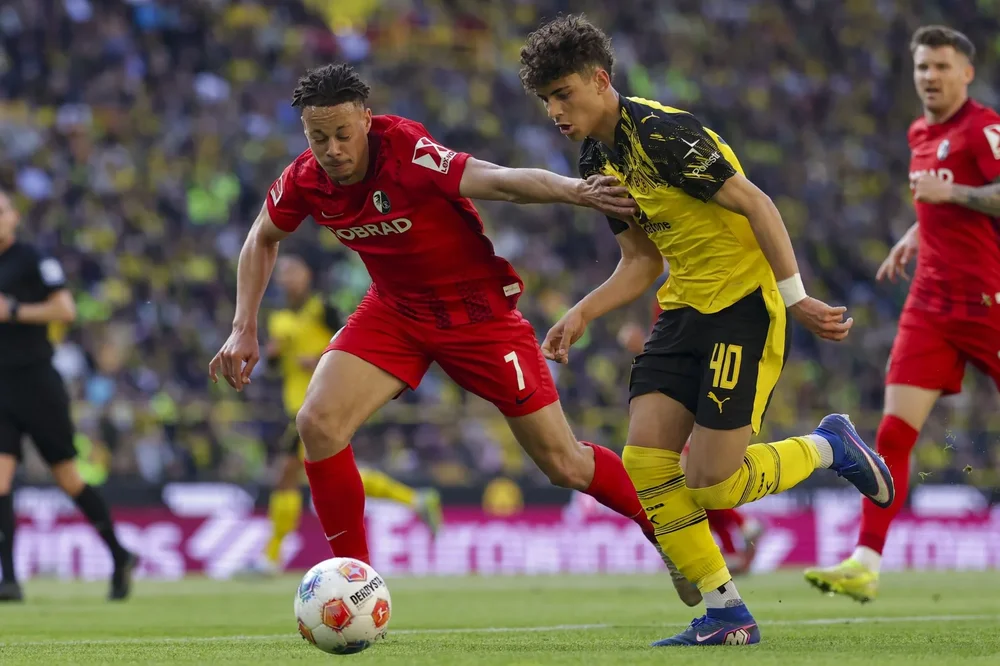
Samuele Inacio, during the match against Freiburg
With three matchdays remaining in the Bundesliga, Borussia Dortmund finds itself with nothing left to play for. Bayern Munich has already secured the title, and Dortmund’s place in next season’s Champions League is confirmed. This situation provides the perfect opportunity for coach Niko Kovac to give playing time to some promising prospects from the club’s academy, including Samuele Inacio (born in Bergamo, Italy, 2008).
Raised in Atalanta’s youth system, Inacio moved to Dortmund’s academy in June 2024. The club snapped him up just in time, as months later he shone at the U17 European Championship, leading Italy to the semifinals with five goals. He also impressed at the U17 World Cup, where the Azzurrini again fell just short of the final. Only a red card against Austria marred his tournament, but Inacio still generated six goals in Qatar.
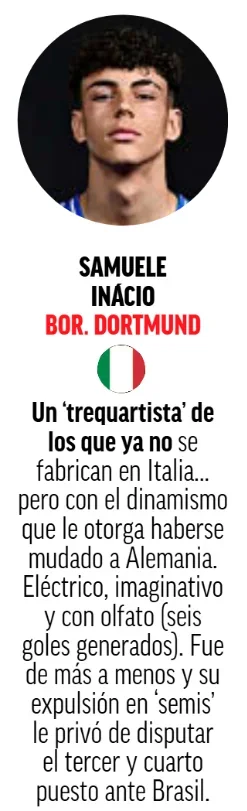
Samuele Inacio (U17 World Cup 2025)
By then, Niko Kovac had already taken him to the Club World Cup, though he didn’t get to play. “It was a unique experience,” Inacio recalled. It wasn’t until early February 2026 that Kovac began regularly including him in Dortmund’s matchday squads. Then, trailing 2-1 in Der Klassiker against Bayern, Kovac gave Inacio his debut, replacing Max Beier with over 15 minutes remaining.
That was enough time—beyond the final result—to introduce himself to the Signal Iduna Park crowd and offer glimpses of his talent playing as an attacking midfielder, moving between the lines, accelerating play, and creating chaos in the final third. With Brazilian blood flowing through his veins (his father is Piá), he combines flair with the grit typical of Italian players, even in lean times.
Brazil’s national team is reportedly trying to secure his allegiance, while Inacio has revealed that his “idol is Neymar” and his playing style “is similar to Rodrygo’s.” For now, he is clear that representing Italy at a World Cup “is a dream come true.” Italy cannot afford to lose him.
“He is a great footballer. If he continues like this, he will have a truly big career. At just 17, I see many qualities in him,” Kovac said after the Bayern match, blessing him as “not only the future of this club, but also of Italian football. He is a technically very clean player.” Indeed, he is the kind of ‘fuoriclasse’ that Italy has struggled to produce in recent years. It cannot be a coincidence that he honed his skills away from the Italian system.
“He is not only the future of this club, but also of Italian football,” said Niko Kovac, Borussia Dortmund coach.
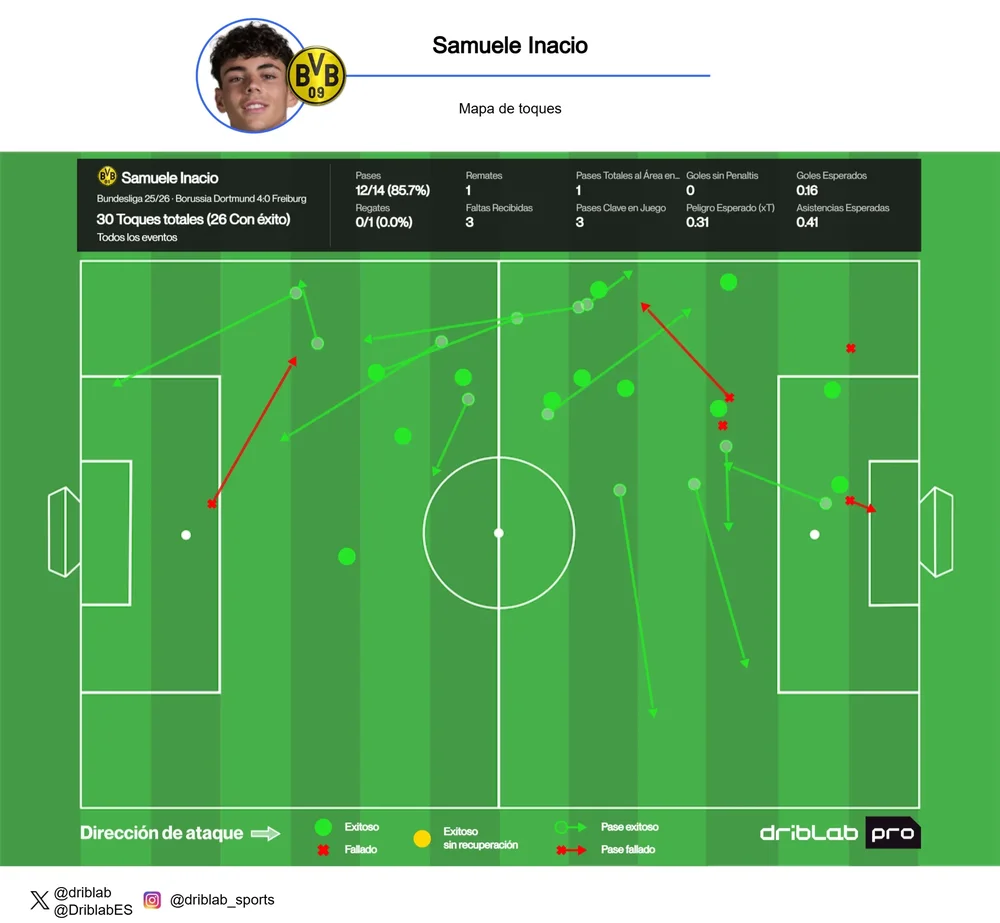
“It’s a crazy moment, the most beautiful of my life,” Inacio confessed that afternoon. He has gradually become more involved in Kovac’s plans, especially in April, when he played 26 minutes against Bayer Leverkusen and 19 against Hoffenheim before earning his first start last weekend against Freiburg. “We believe in him, he works hard, and he deserves to play,” Kovac added.
Inacio rose to the occasion, never overwhelmed by the situation.